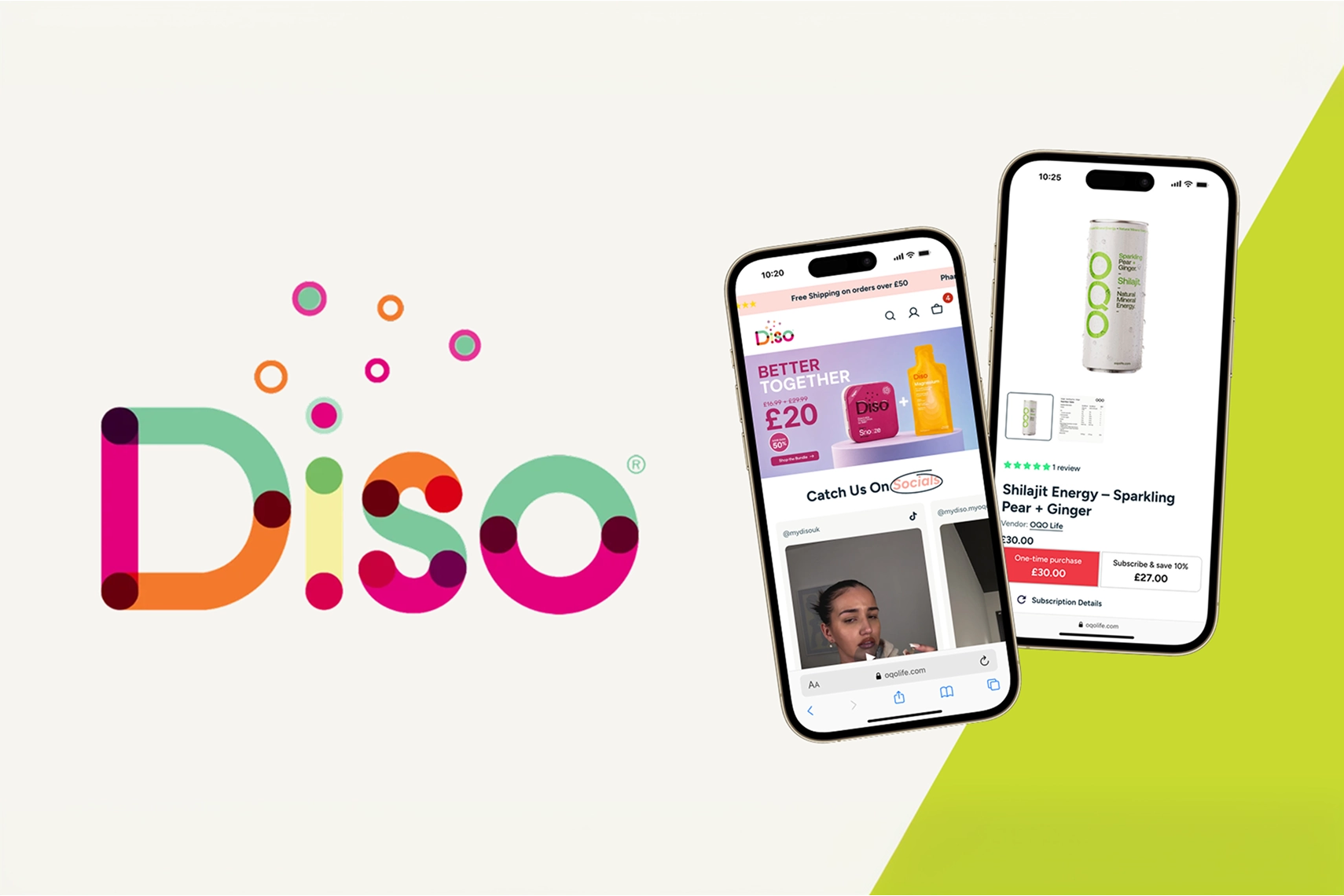
Diso is now OQO: built around everyday goals

Wellness customers rarely shop by product.

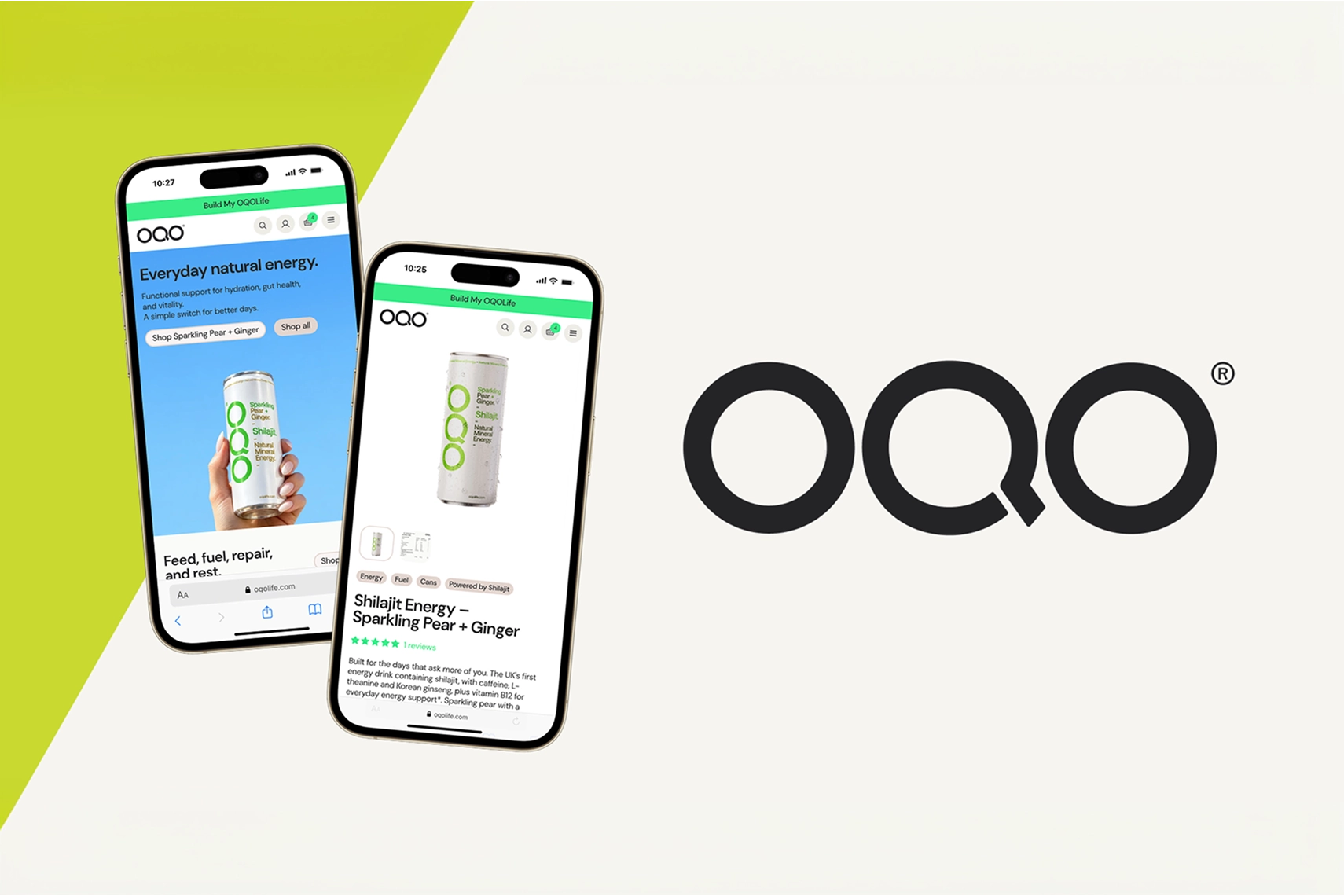
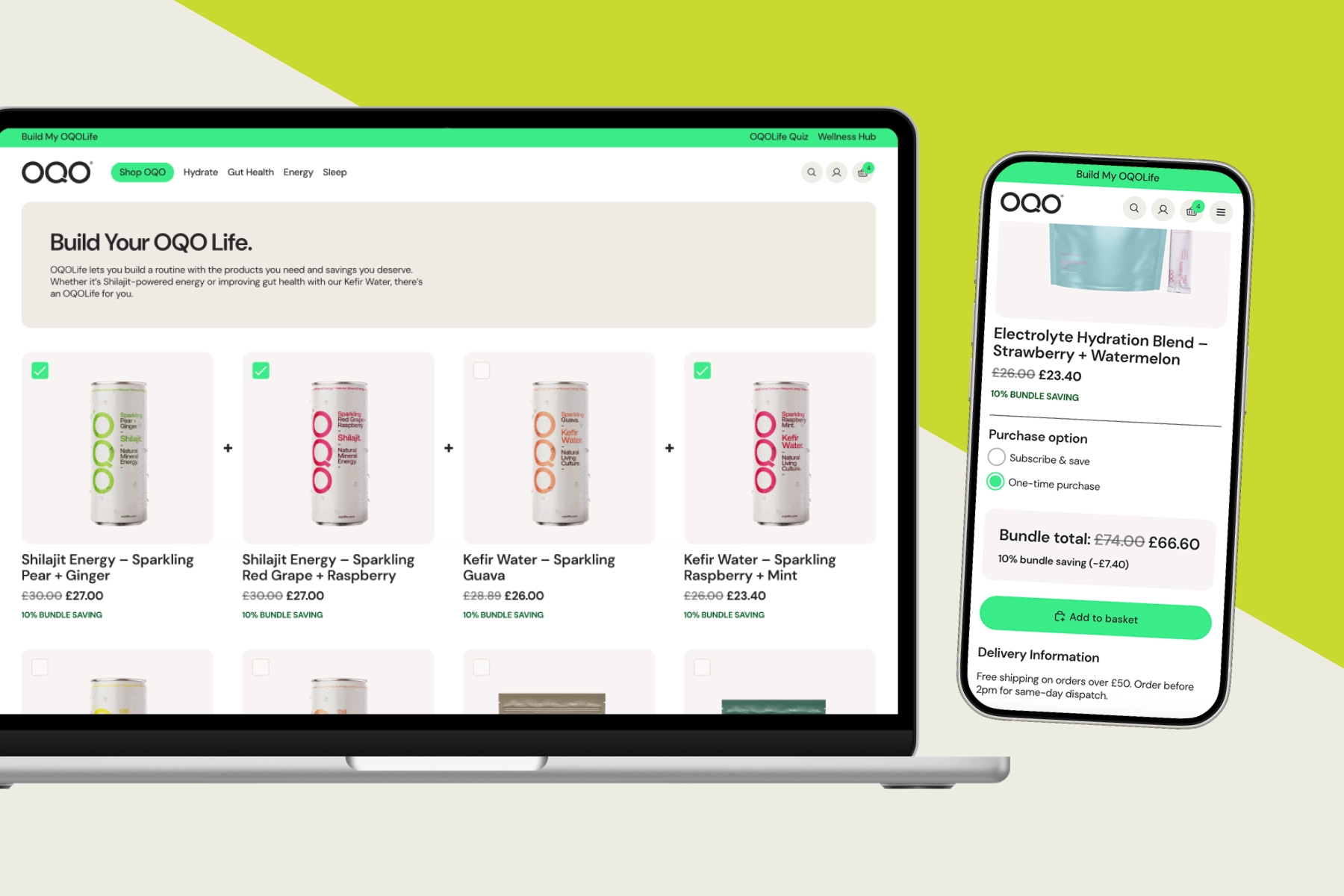
They shop by goal: more energy, better hydration, a settled gut, an easier wind-down. OQO’s customers were shopping across three overlapping storefronts, split between two brand names. We brought them together as one brand, on one Shopify site, led by an expanded ready-to-drink range organised around four everyday goals.

The facts

Client:
OQO (formerly Diso)
Sector:
Functional nutrition and wellness
Services:
Brand consolidation; Shopify design and development; copywriting; Klaviyo email marketing; SEO and AI search
Launched:
October 2026

What was the challenge

?

A rebrand is rarely a design problem. It’s a journey problem: customers need to know where to go, and search engines need to know who you are.OQO’s customers had three storefronts to choose from, and no clear route through any of them. Diso was best known for its dissolvable strips, while OQO had grown into drinks, sachets and capsules. Across mydiso, drinkoqo and oqoflow, the two brands overlapped. The same customer could start on one site, browse on another and end up unsure which brand they were buying from.

That split diluted the authority both names had built. Seen on Dragons’ Den, Diso had already established its reputation with dissolvable strips – but he brand around the products needed to be just as clear.

How do you bring two brands under one name

?

Why lead with ready-to-drink

?

In wellness, the easiest first purchase is usually the one that wins the customer. A can from the fridge asks little of the customer – it’s a simple first step, and it gives everything else on the site something to build on.

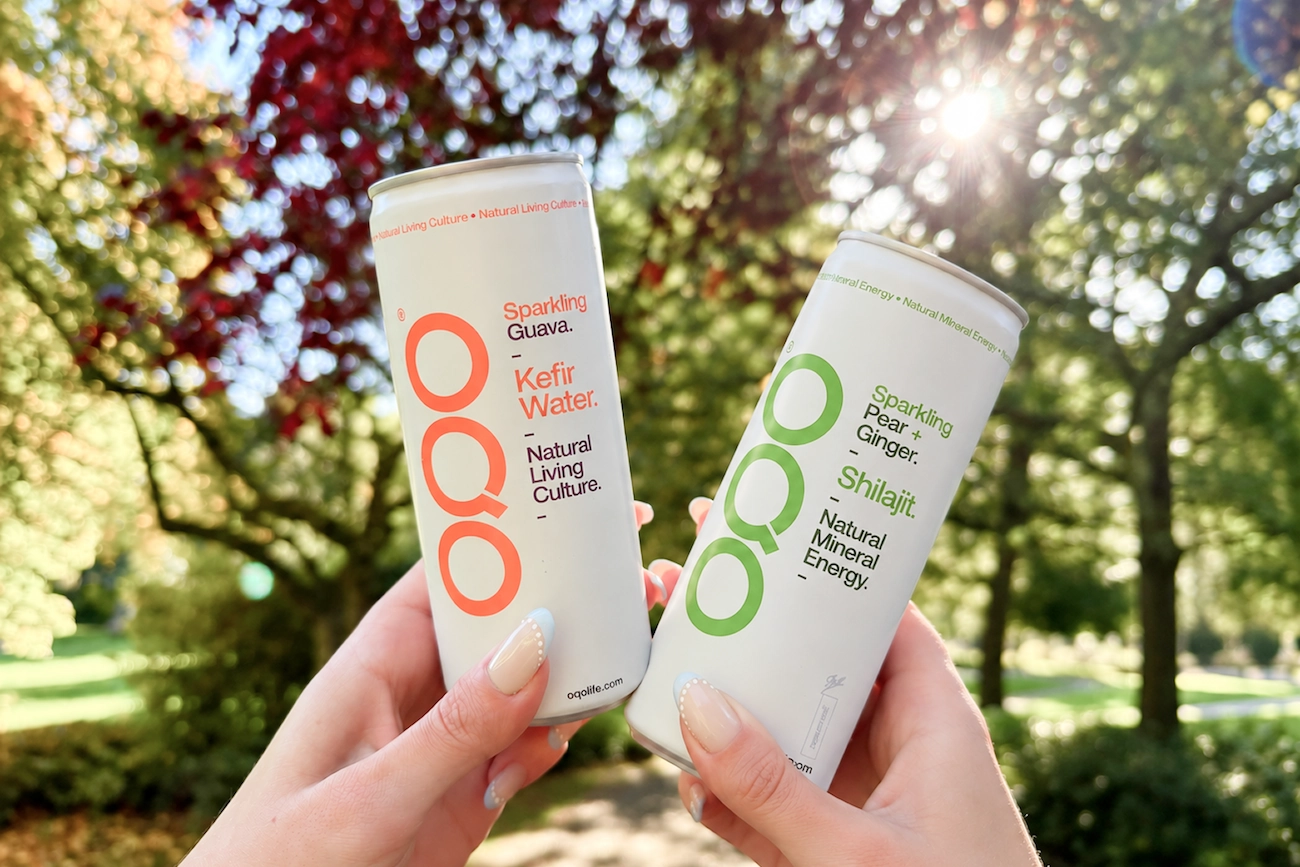
The relaunch shifted OQO’s focus towards convenience, with an expanded range of ready-to-drink cans leading the way. Ten cans across Shilajit Energy, Kefir Water, Fibre Iced Tea and Energy Plus now head up the range, with sachets and capsules alongside them to complete the OQO routine.

Why organise a wellness site by goal

?

Wellness is one of the few sectors where customers arrive knowing their goal, but not the product.

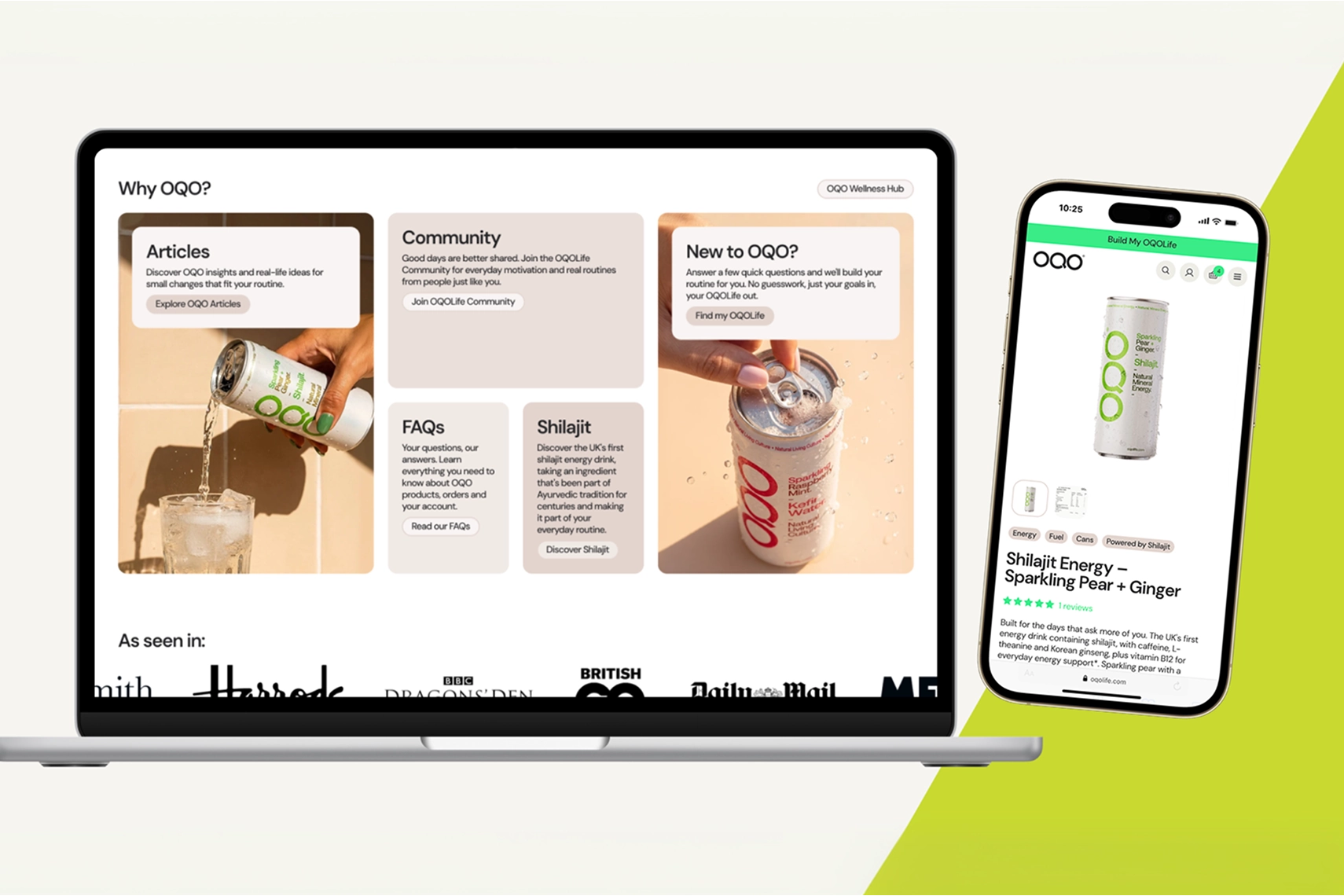
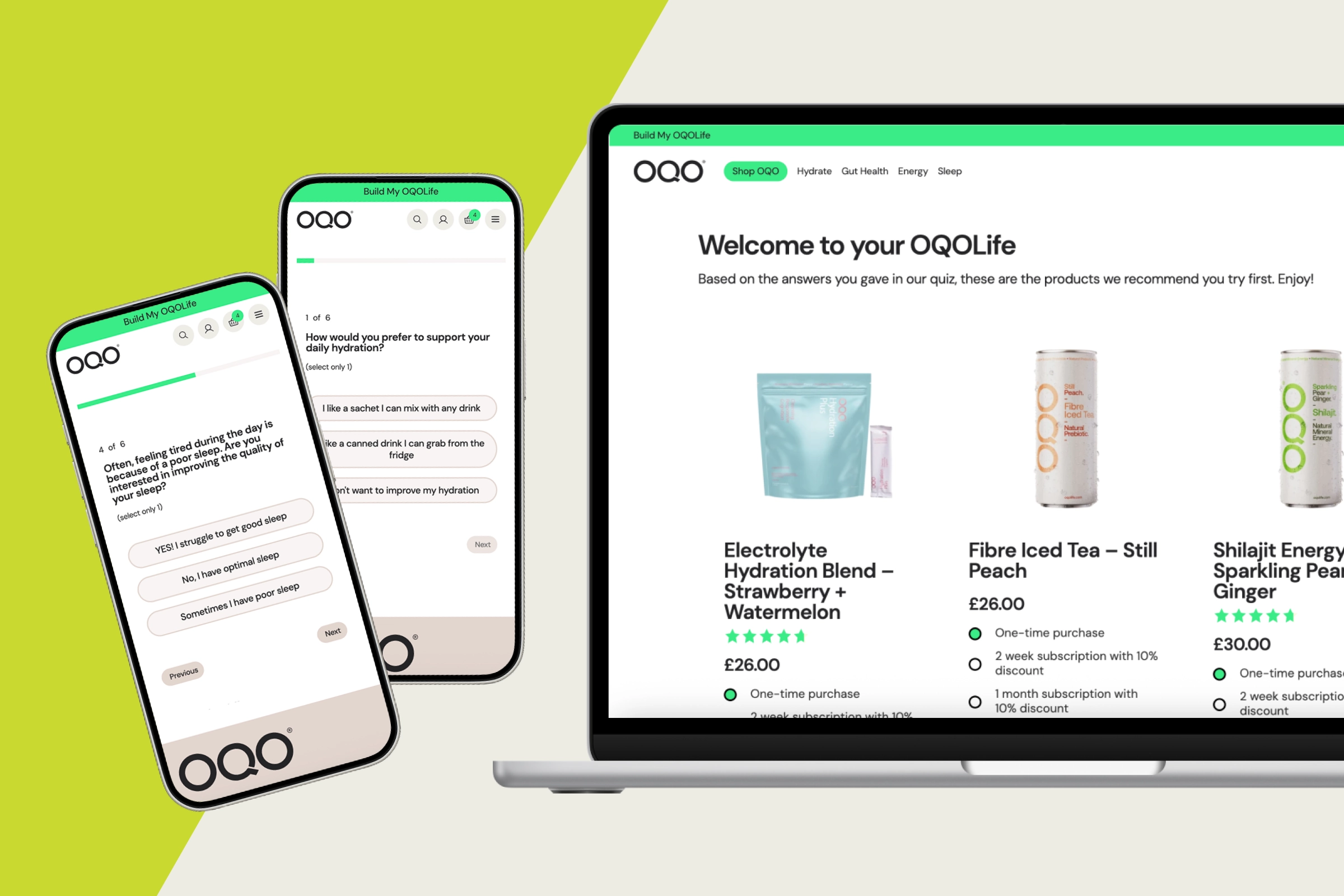
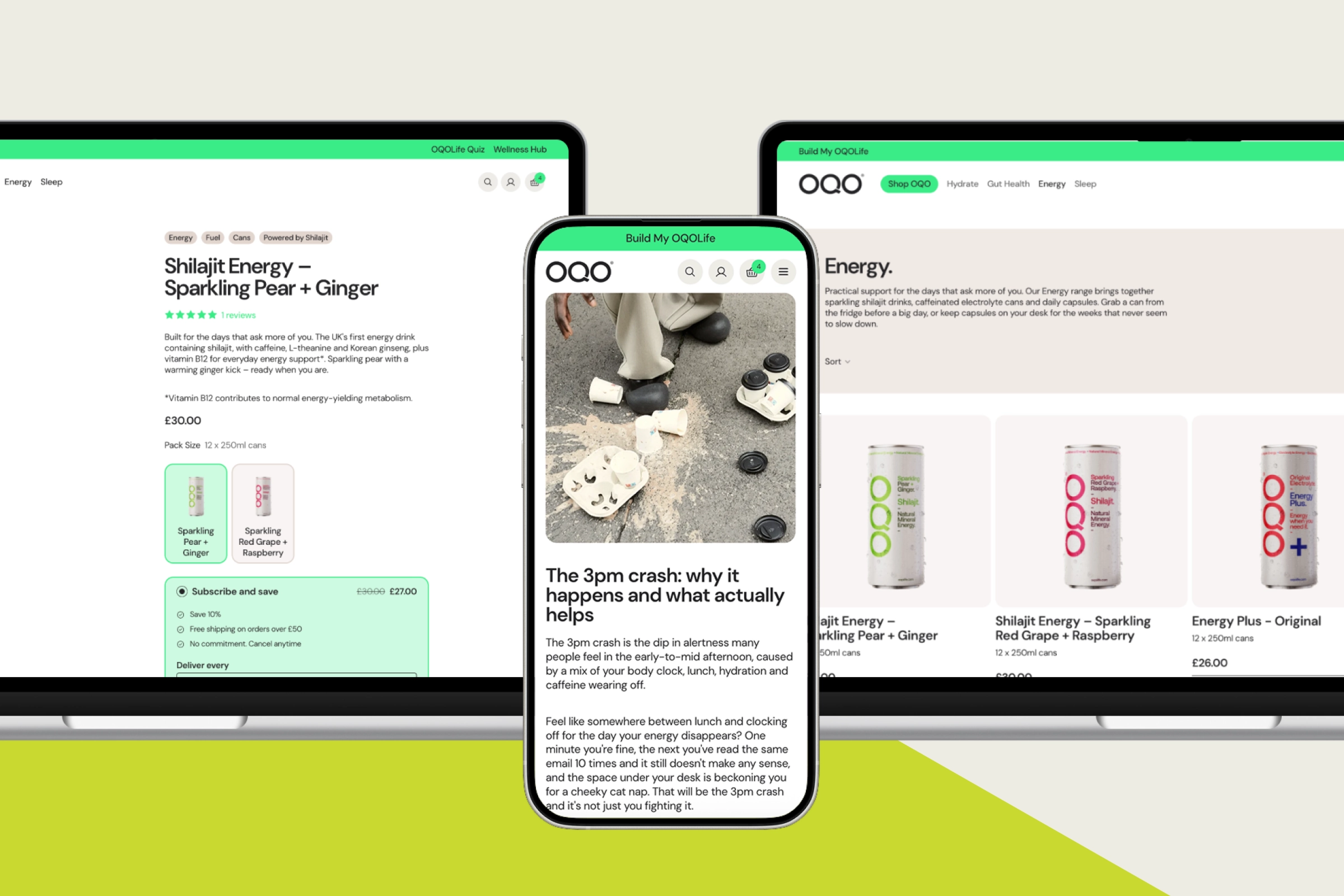
The OQO site is organised around four everyday health benefits (Hydrate, Gut Health, Energy and Sleep) rather than product types. Nobody wakes up wanting a capsule – they want to burst through the 3pm slump, or wind down properly at the end of the day.

Most OQO customers already have a routine. What they’re looking for is the next thing to add to it. Organising by goal answers that on every page. Someone who arrives for energy can see what sits alongside it, described in terms of what they’re trying to do.

How do you write wellness copy that stays within the rules

?

In wellness, what you can say is tightly regulated, down to the exact wording.

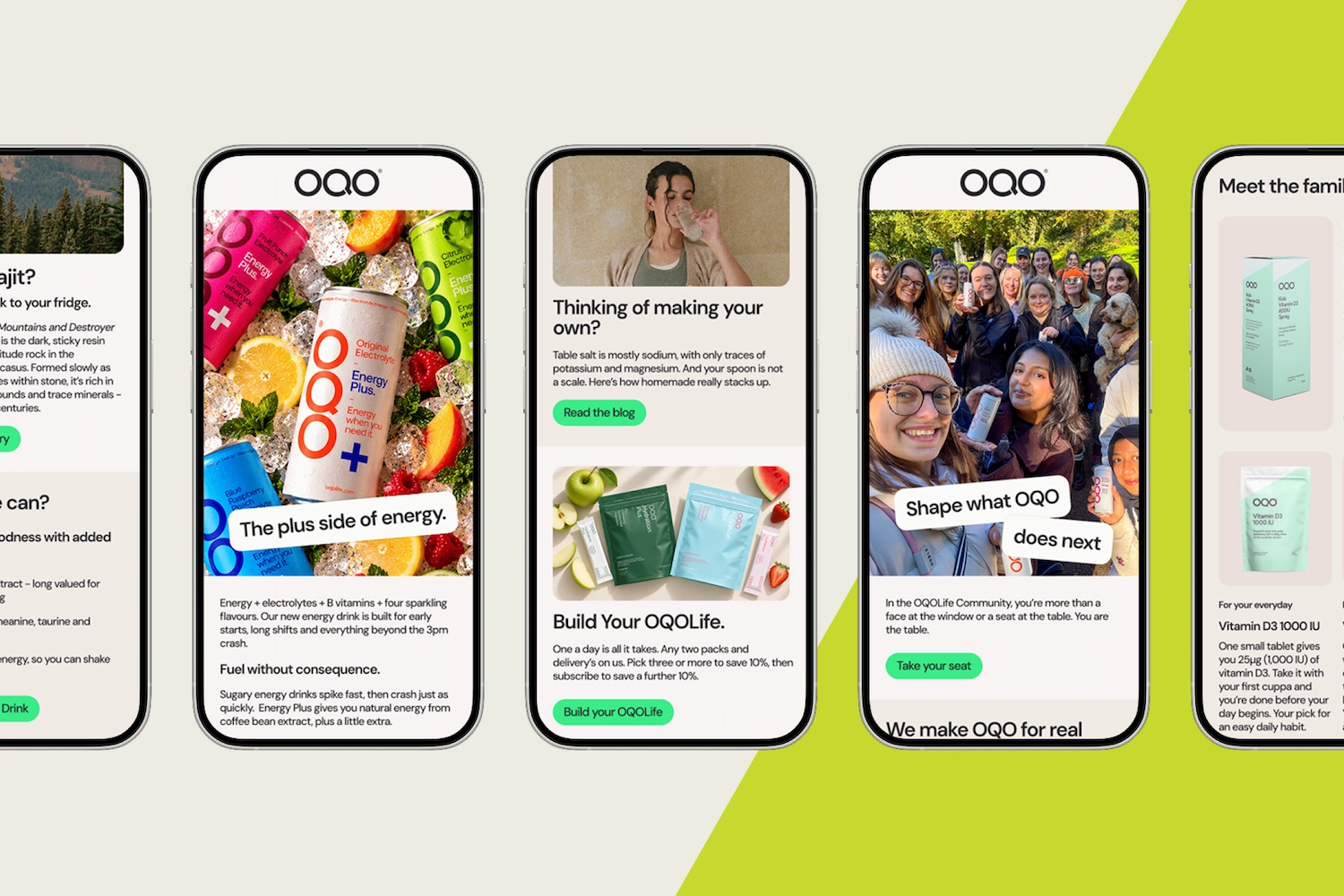
Every claim on the site was matched to its authorised wording on the GB Nutrition and Health Claims register. Each one was then checked against its conditions of use, such as the minimum amount of a vitamin or mineral a serving must contain before the claim can be made. We wrote every product page, collection, FAQ and email to that standard, while still sounding like a brand people want to engage with.

What does one brand mean for search

?

One brand gives search engines and AI tools one name to recognise.Instead of splitting signals between Diso and OQO, every link, review and mention now builds authority for OQO. The Wellness Hub and launch articles were written to be found and cited by AI search as well as by Google. Each one answers its question early, opens every section with a clear fact and uses headings that match how people search today.


How often AI tools mention OQO when customers ask about functional drinks is the consideration we work towards. At bjm.digital, we pursue recognition alongside rankings.

What’s next

?

OQO launched in October 2026, and the focus now moves to growth.With the site now operational, there is a foundation in place from which to build OQOLife Community across Facebook, Instagram and TikTok. And with a Shopify build designed to grow, OQO can launch new products quickly and regularly, giving customers more ways to build their routine

Our take: thinking of bringing brands together

?

Three things we’d tell any brand before they start:
  1. Map every old URL to its new home before launch. It protects the authority you’ve already built.
  2. Organise by what customers want, not by what you make.
  3. Write to the claims rules from day one. Fixing copy later costs more than getting it right the first time.
Got a few brands that should really be one, or a range that’s outgrown its website? Let’s chat.
Next case study